
Illustrative translucent blue and violet protein surrounding a glowing gold molecular ligand.
The Lavinda Lab · Women’s Health Research

What happens to histamine regulation after childbirth?

During pregnancy, levels of DAO, the enzyme that breaks down histamine, rise sharply. After delivery they fall. We are investigating whether compounds in postpartum supplements interfere with this enzyme, and whether common genetic differences change the effect.

Background

What is histamine?

Histamine is one of the body’s chemical messengers. It drives allergic and inflammatory reactions, helps regulate stomach acid, and in the brain helps maintain wakefulness.

The body relies on two enzymes to break histamine down. One of them, diamine oxidase (DAO), works outside cells, mainly in the gut. It is the focus of our research.

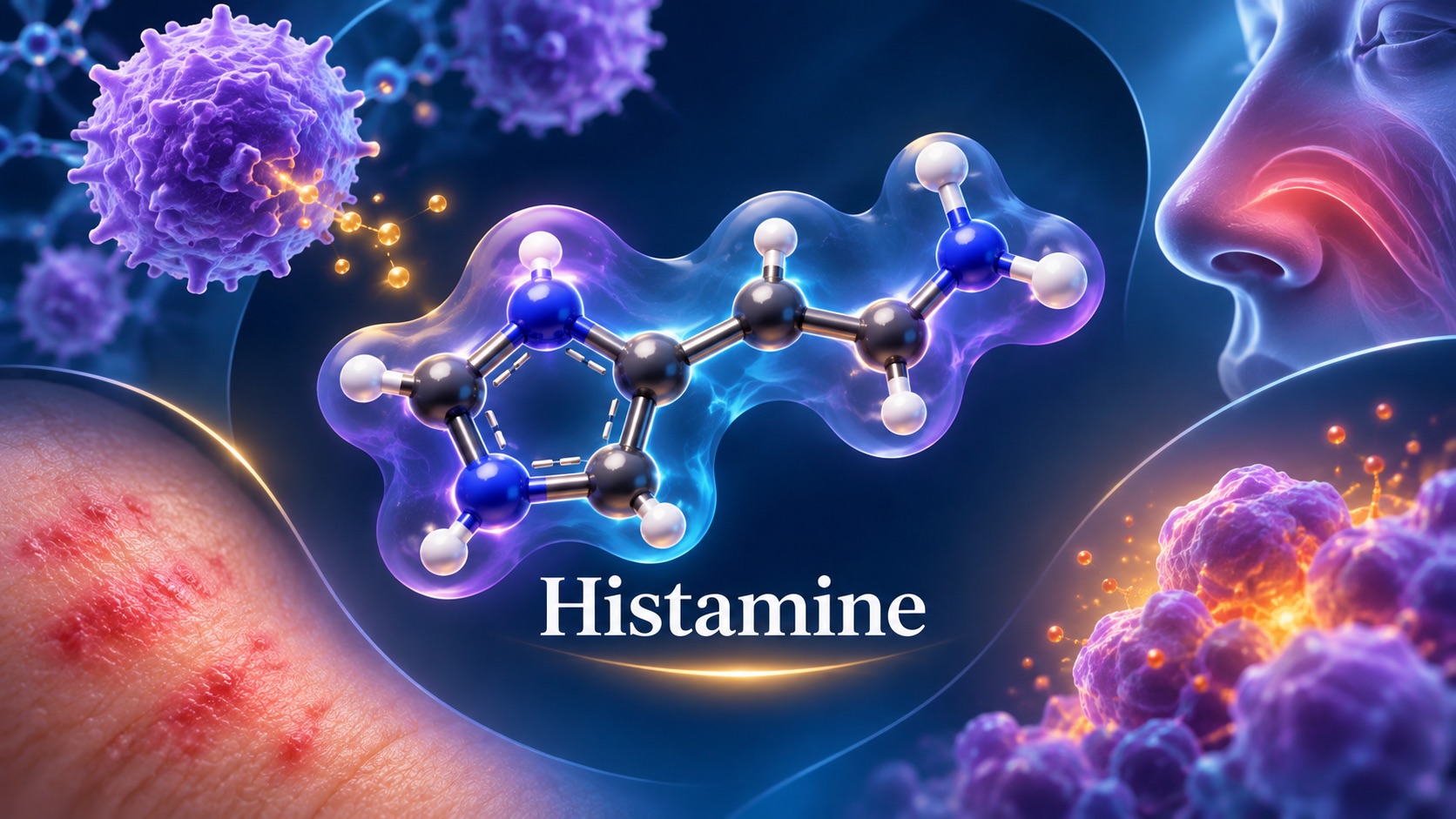
A histamine molecule surrounded by an immune cell, irritated skin, and a nose, representing allergy and immune signaling.
Pregnancy changes the picture

The enzyme surges in pregnancy, then falls after delivery

During pregnancy the placenta produces DAO in large amounts, and its activity in the mother’s blood rises to many times the usual level. After delivery it declines again.

Our research begins with that decline. In the weeks after birth, the body’s capacity to break down histamine is falling quickly, and many women are taking herbal supplements. How the compounds in those supplements affect DAO has received little study.

DAO activity changes across pregnancy

Mean serum DAO activity in a small observational cohort of women with histamine intolerance (n = 30), U/mL.

Before pregnancyDuring pregnancyTwo months postpartum
Duelo and colleagues, Journal of Clinical Medicine, 2025, doi:10.3390/jcm14134573.
What about genetics?

The gene behind the enzyme varies from person to person

The gene that carries the instructions for DAO is called AOC1. Several versions of this gene, known as variants, are common in the general population.

Some AOC1 variants may influence DAO enzyme activity, potentially affecting how efficiently extracellular histamine is metabolized. However, carrying a variant does not necessarily mean having impaired DAO function.

A DNA double helix beside a histamine molecule, the DAO enzyme, and a row of women in different colors, representing genetic variation between people.
66%
of 200 healthy newborns

carried at least one of four AOC1 variants in one study.

Fortes Marin and colleagues, Genes, 2025

72%
of 100 healthy adults

carried at least one of the same four variants in another.

Duelo and colleagues, Nutrients, 2024

Histamine, sleep, and inflammation

What histamine does in the body

TopicWhat research shows
Sleep Histamine signaling in the brain helps promote wakefulness. Haas and colleagues, 2008; Thakkar, 2011
Inflammation Histamine takes part in allergic and inflammatory responses, including itching and changes in how easily fluid passes through blood-vessel walls. Thangam and colleagues, 2018
DAO DAO breaks down histamine outside cells, especially in the gut. A second enzyme, HNMT, handles histamine inside cells and is the main pathway in the brain. Maintz and Novak, 2007; Yoshikawa and colleagues, 2019
After childbirth DAO activity rises steeply during pregnancy and declines after delivery. Maintz and colleagues, 2008; Duelo and colleagues, 2025
Our question Can selected supplement compounds change DAO activity, and do selected AOC1 variants change that response?
Supplement capsules surrounded by turmeric, ginger, blueberries, mint, milk thistle, and chamomile, with a histamine molecule above them.
The research question

Why study postpartum supplements?

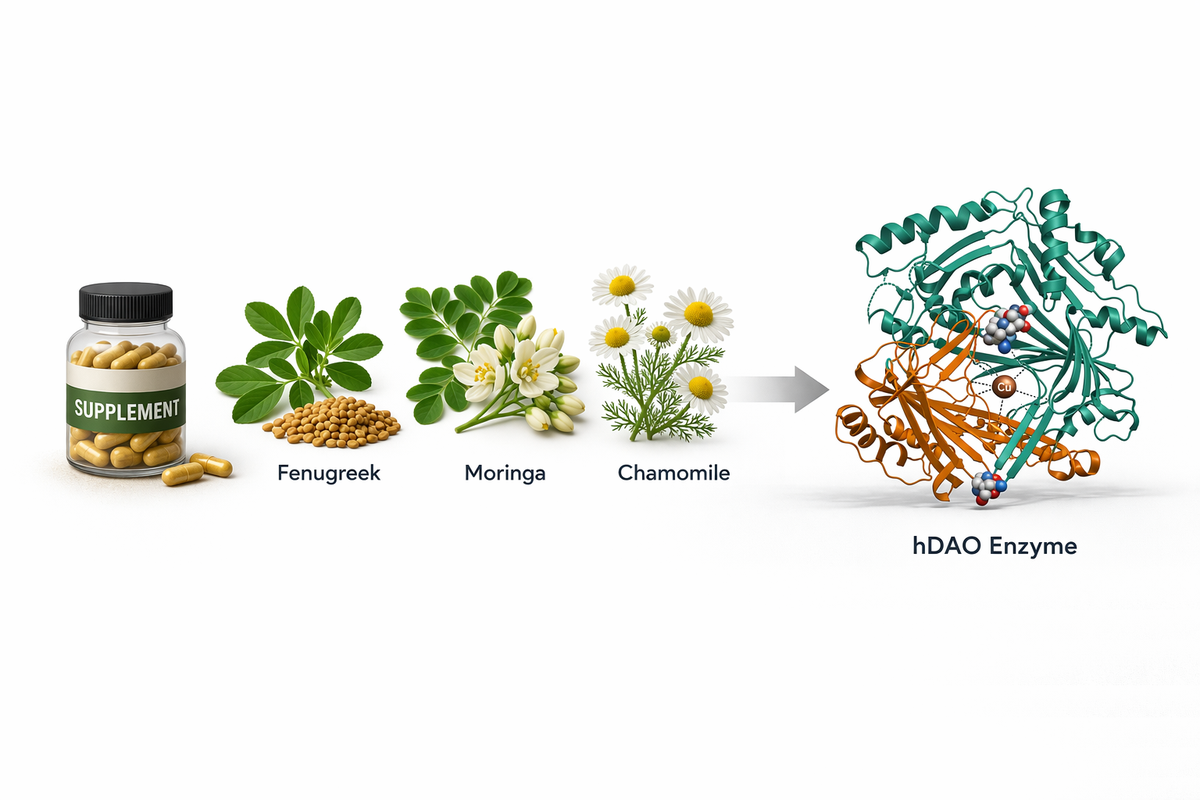
Supplements marketed for postpartum recovery and breastfeeding contain plant-derived compounds, and women take them during the weeks when DAO activity is declining from its pregnancy peak.

We ask two questions. Do specific compounds in these supplements inhibit DAO? And do common AOC1 variants make the enzyme more or less sensitive to them?

How we study it

From ingredient to evidence

We work in stages. Computer models predict how each compound might bind to the enzyme. Laboratory experiments then measure whether the compound actually slows the enzyme down. Finally, we compare the two.

  1. 01

    SELECT

    Identify plant-derived compounds listed on postpartum and breastfeeding supplement labels.

  2. 02

    PREDICT

    Use computer modeling to predict how each compound fits into DAO and its variants.

  3. 03

    TEST

    Measure in the laboratory how each compound affects the enzyme’s activity.

  4. 04

    COMPARE

    Compare the measurements with the predictions.

Where prediction and experiment disagree, the disagreement is itself a result.

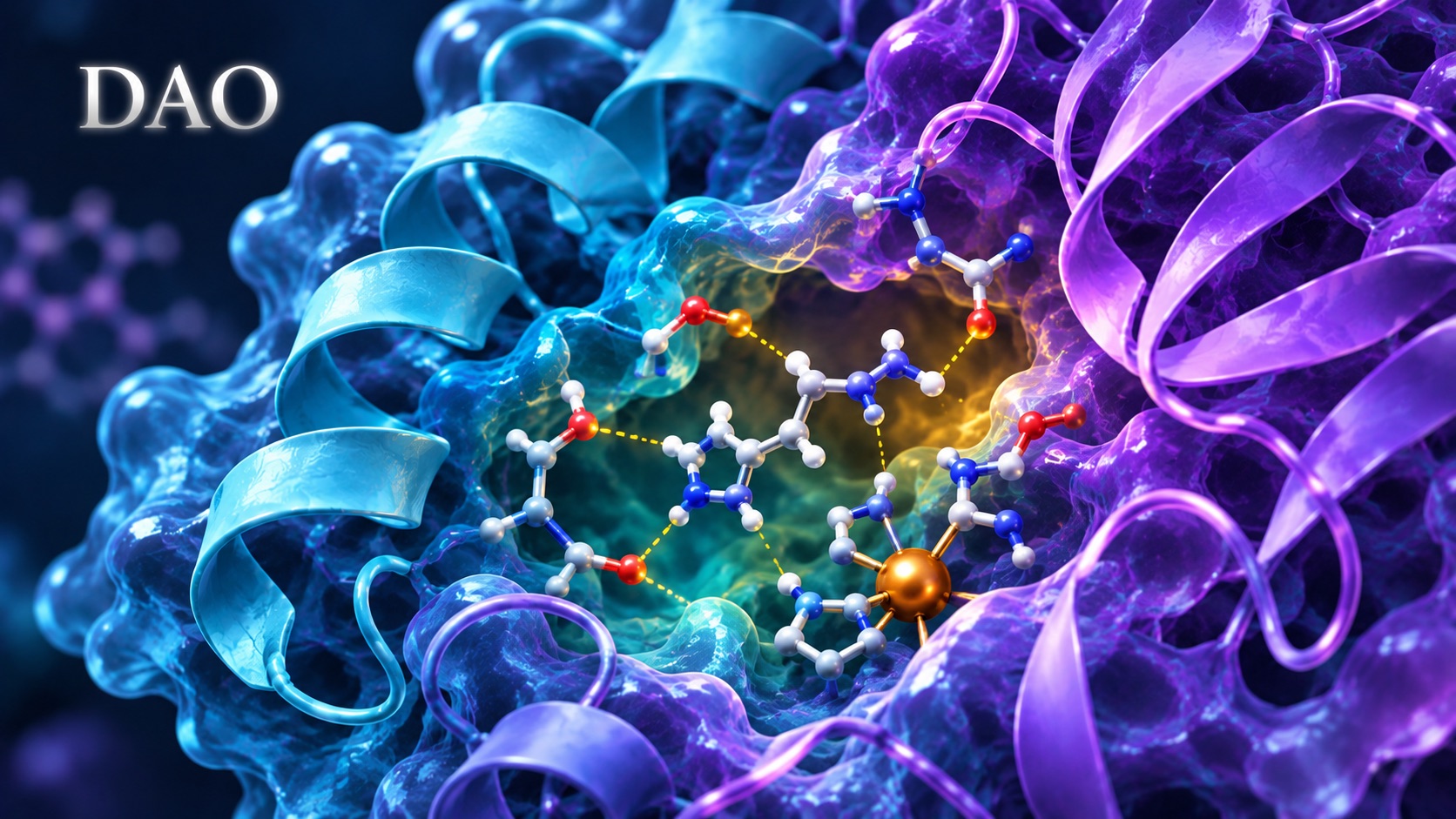
An enzyme in blue and violet with a glowing binding pocket holding a small molecule next to a copper-colored metal atom, labeled DAO.
The enzyme

Diamine oxidase

DAO is built from two identical halves. Each half contains an active site, the place where the chemistry happens, at the end of a narrow channel. Histamine travels down the channel and is broken down there with the help of a copper atom.

A compound that lodges in the channel or the active site keeps histamine out, and the enzyme slows down. Known DAO inhibitors work this way. We want to know whether compounds from supplements can do the same.

The structure of human DAO

This is the experimentally determined structure of human DAO with a known inhibitor, berenil, bound to it. The tour moves from the whole enzyme into the site where berenil binds, and back.

  • DAO, first half
  • DAO, second half
  • Berenil (inhibitor)
  • Neighboring parts of the enzyme (close-up)
  • Contacts

Human diamine oxidase with the inhibitor berenil bound (Protein Data Bank entry 3HIG; McGrath and colleagues, Biochemistry, 2009).

Berenil is our reference compound. Because its exact position on the enzyme is known from experiment, we use it to check that our computer modeling can reproduce a real binding position before we apply it to new compounds.

Drag to rotate. Click the model, then scroll or pinch to zoom.

What we are finding

Early results

Results from the computer modeling so far. Laboratory measurements are the next stage.

Computational
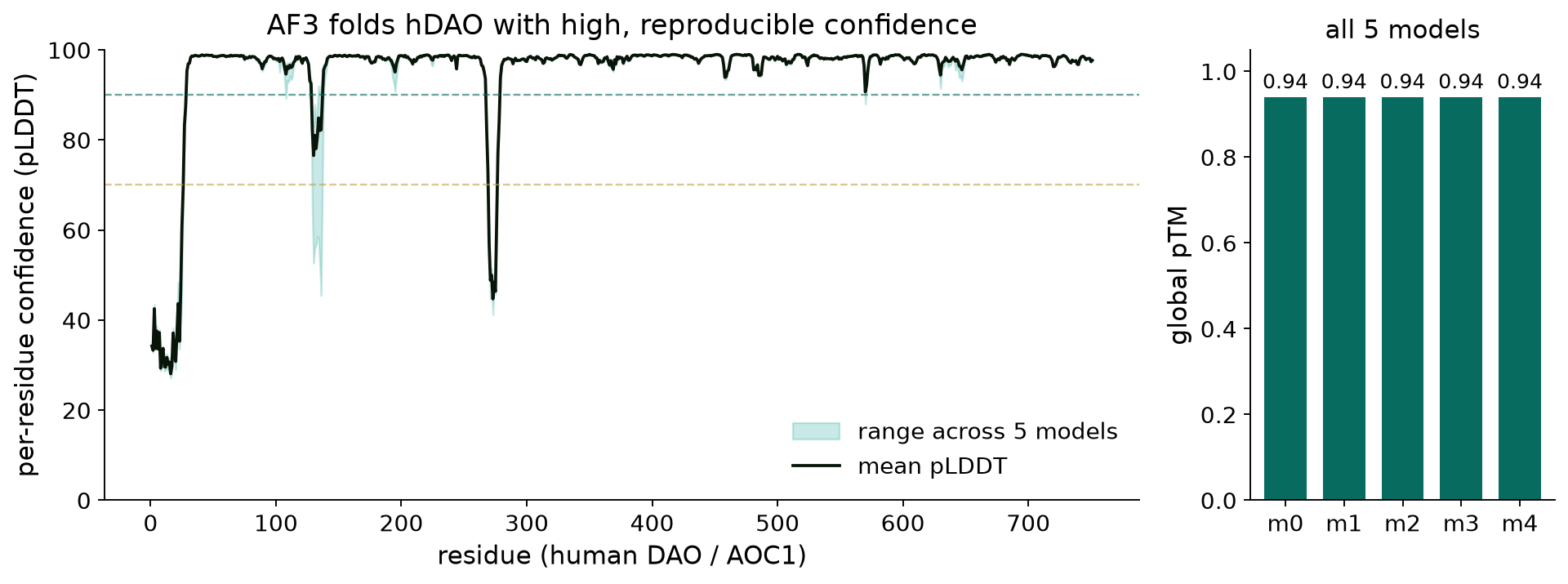
Line chart of AlphaFold 3 per-residue confidence along the human DAO sequence, with a bar chart showing a global pTM score of 0.94 for each of five models.

The predicted model of DAO is reproducible

AlphaFold 3, an AI system that predicts protein structure, produced nearly identical models of human DAO in five separate runs, with high confidence across most of the protein. This gives us a reliable model to work from.

Sample
Human DAO (AOC1) protein sequence
Method
AlphaFold 3 structure prediction
Measure
Per-residue confidence (pLDDT, 0 to 100) and global pTM (0 to 1)
Comparison
Five models from the same prediction; shaded band shows the range across them
Computational
Close-up of the hDAO crystal structure 3HIG showing the deposited and the redocked positions of berenil overlaid in the channel near the TPQ cofactor and copper.

A control test with a known inhibitor

Before modeling new compounds, we removed berenil from the experimental structure and asked the software to place it again. The image overlays the experimental position and the predicted one.

Compound
Berenil (reference inhibitor)
Method
Redocking with AutoDock Vina into PDB 3HIG
Comparison
Redocked pose against the deposited crystal pose
Coming next

Laboratory measurements

Measurements of how each compound affects DAO activity are the next stage of the project. Results will be reported here.

Graphical abstract from the hDAO poster: berenil control in the hDAO crystal structure.
Poster · ACS Fall 2026 · Medicinal Chemistry
Free Docking and Allosteric Site Exploration of Breastfeeding Supplement Ingredients at Human Diamine Oxidase: An AlphaFold 3 and AutoDock Vina Study

Olga Lavinda · American Chemical Society Fall 2026 meeting, Division of Medicinal Chemistry poster session

View the virtual poster
Who is involved

People and support

The project is led by Olga Lavinda, PhD, Clinical Assistant Professor of Chemistry at Stern College for Women, Yeshiva University, and faculty advisor to the university’s American Chemical Society (ACS) Student Chapter.

Student researchers

Graduate students in the Katz MS in Biotechnology program lead compound selection, data analysis, and visualization for this project.

Meet the lab team

Funding

This project is supported by a 2026-27 Faculty Research Initiative grant from the Katz College of Science and Health at Yeshiva University, for “Chemistry-Aware Validation of AI-Predicted hDAO Structures and Protein–Ligand Complexes.”

Read the Yeshiva University announcement

Related work in the lab: the tyrosinase family project applies the same validation methods to a different enzyme system, with its own interactive structures.

Related research and reading

Related work

Sources

  1. Duelo A, Sánchez-Pérez S, Pellicer-Roca S, and colleagues. Improvement of Histamine Intolerance Symptoms in Pregnant Women with Diamine Oxidase Deficiency: An Exploratory Study. Journal of Clinical Medicine. 2025;14(13):4573. doi:10.3390/jcm14134573
  2. Fortes Marin E, Carrera Marcolin L, Martí Melero L, Tintoré Gazulla M, Beltran Porres M. The Prevalence of Single Nucleotide Polymorphisms of the AOC1 Gene Associated with Diamine Oxidase (DAO) Enzyme Deficiency in Healthy Newborns: A Prospective Population-Based Cohort Study. Genes. 2025;16(2):141. doi:10.3390/genes16020141
  3. Duelo A, Comas-Basté O, Sánchez-Pérez S, and colleagues. Pilot Study on the Prevalence of Diamine Oxidase Gene Variants in Patients with Symptoms of Histamine Intolerance. Nutrients. 2024;16(8):1142. doi:10.3390/nu16081142
  4. Maintz L, Schwarzer V, Bieber T, van der Ven K, Novak N. Effects of histamine and diamine oxidase activities on pregnancy: a critical review. Human Reproduction Update. 2008;14(5):485-495. doi:10.1093/humupd/dmn014
  5. Maintz L, Novak N. Histamine and histamine intolerance. American Journal of Clinical Nutrition. 2007;85(5):1185-1196. doi:10.1093/ajcn/85.5.1185
  6. Haas HL, Sergeeva OA, Selbach O. Histamine in the Nervous System. Physiological Reviews. 2008;88(3):1183-1241. doi:10.1152/physrev.00043.2007
  7. Thakkar MM. Histamine in the regulation of wakefulness. Sleep Medicine Reviews. 2011;15(1):65-74. doi:10.1016/j.smrv.2010.06.004
  8. Yoshikawa T, Nakamura T, Yanai K. Histamine N-Methyltransferase in the Brain. International Journal of Molecular Sciences. 2019;20(3):737. doi:10.3390/ijms20030737
  9. Thangam EB, Jemima EA, Singh H, and colleagues. The Role of Histamine and Histamine Receptors in Mast Cell-Mediated Allergy and Inflammation: The Hunt for New Therapeutic Targets. Frontiers in Immunology. 2018;9:1873. doi:10.3389/fimmu.2018.01873
  10. McGrath AP, Hilmer KM, Collyer CA, and colleagues. Structure and Inhibition of Human Diamine Oxidase. Biochemistry. 2009;48(41):9810-9822. doi:10.1021/bi9014192

Work with us

We welcome inquiries from researchers, clinicians, educators, and program partners.

Get in touch

This page describes research in progress and is shared for general education. Last updated November 20, 2026. 3D viewer: Mol*. Illustrations are artist’s concepts.